Home > Blog > Benefits of Makhana: Nutrition, Uses & Where It Grows in India
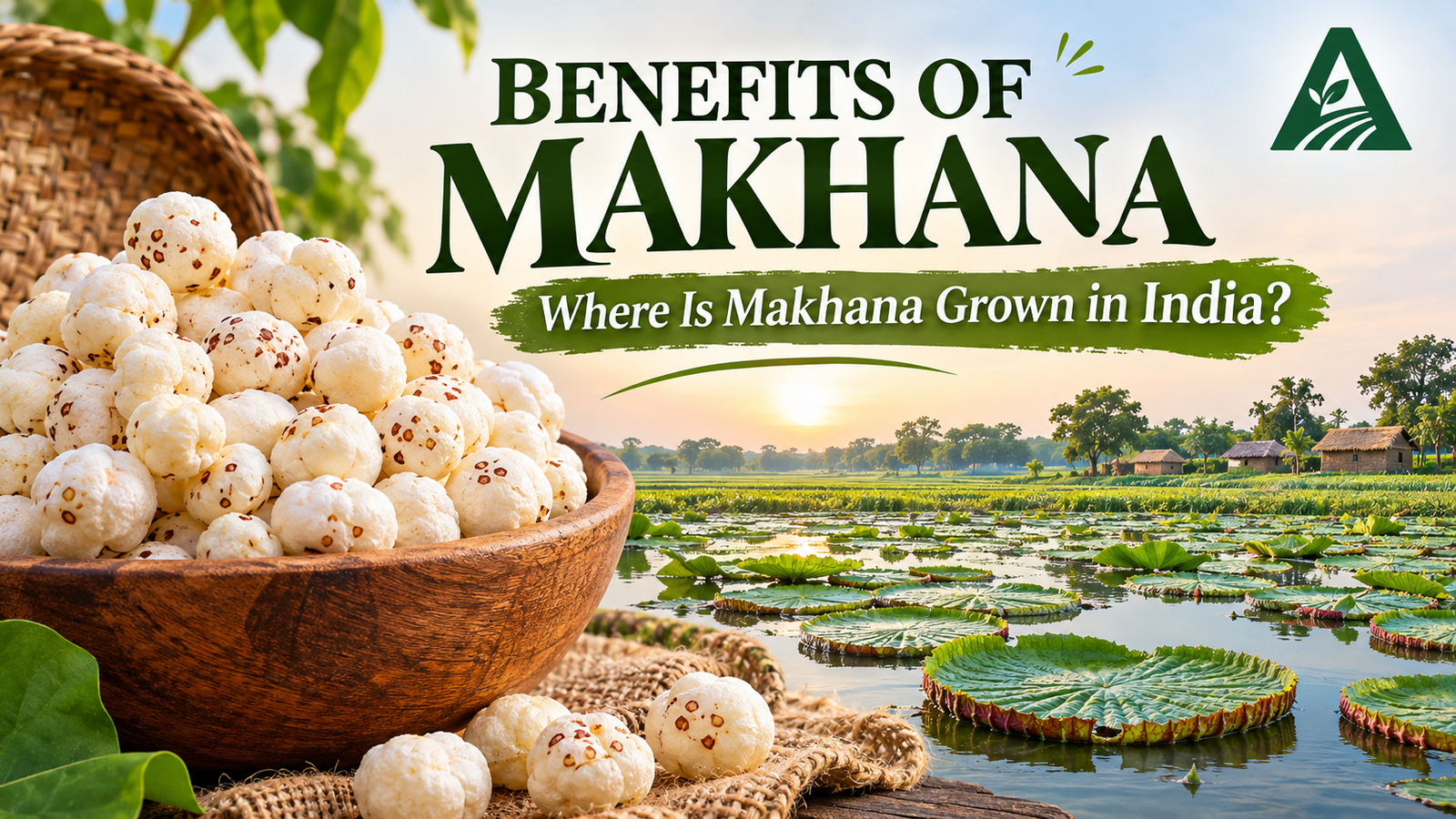
Healthy snacking does not always require expensive ingredients or complicated recipes. Sometimes, one of the best additions to your snack cupboard comes from India's traditional agricultural heritage.
Makhana, also known as fox nuts or phool makhana, is a perfect example. These light, crunchy white seeds have been enjoyed in Indian households for generations. Today, they are increasingly popular among people looking for convenient, plant-based snacks.
But what makes makhana special? What are the benefits of makhana, and where is makhana grown in India?
Let's explore its nutritional qualities, cultivation journey, growing regions, and everyday uses.
Makhana is the edible seed of an aquatic plant called Euryale ferox. The plant grows in water-rich environments, including ponds, wetlands and specially managed flooded fields.
After harvesting, the seeds undergo drying, grading, roasting and popping processes that transform their hard interiors into the familiar white, airy makhana.
Unlike ordinary nuts, makhana is an aquatic seed. It is commonly called fox nut or gorgon nut and is sometimes referred to as lotus seed, although it comes from a different plant than the true lotus.
Makhana is used in traditional Indian recipes, festive meals, sweets, curries and roasted snacks.
Its popularity comes from three simple qualities: versatility, satisfying crunch and useful nutrients.
Plain makhana contains carbohydrates, some plant-based protein, dietary fibre and minerals. Its nutritional composition makes it an appealing option within a balanced diet.
Protein supports the body's normal growth, tissue maintenance and repair.
Makhana provides plant-based protein, making it a useful addition to vegetarian eating patterns.
However, it is not a replacement for concentrated protein sources such as lentils, dairy products or soy foods.
Combining makhana with roasted chickpeas, yoghurt or other protein-containing foods can create a more balanced snack.
One of the important nutritional benefits of makhana is that plain makhana is naturally low in fat.
This makes it a practical alternative to many deep-fried snacks when prepared with limited oil.
For example, dry-roasted makhana with mild seasoning can offer a satisfying crunch without the large amounts of added fat found in some packaged snacks.
The final fat content depends on whether oil, ghee, butter or flavouring has been added during preparation.
Mindless snacking can make it difficult to maintain consistent eating habits.
Makhana offers a crunchy texture that can make a measured snack portion enjoyable.
Its combination of carbohydrates, protein and fibre may contribute to fullness, especially when paired with another nutritious food.
For people trying to manage their weight, replacing frequent servings of deep-fried snacks with portion-controlled roasted makhana may be helpful.
Remember that makhana still contains calories, so portion size matters.
Makhana contains minerals such as magnesium, phosphorus and potassium, although their amounts vary by product and processing method.
These nutrients contribute to normal body functions.
Magnesium helps support normal muscle and nerve function.
Phosphorus contributes to the maintenance of bones and teeth.
Potassium plays a role in normal muscle function and fluid balance.
Eating a variety of mineral-containing foods remains important because no single snack provides every essential nutrient.
Plain, unsalted makhana is naturally low in sodium.
For people who want to reduce their intake of heavily salted packaged snacks, choosing plain roasted makhana can be a useful option.
You can add flavour with black pepper, cumin, herbs, or a small amount of your favourite spices.
Be mindful that commercially flavoured varieties may contain additional sodium.
Dietary fibre is an important part of a healthy eating pattern and supports normal digestive function.
Makhana contributes some fibre to the diet, although it should not be considered an exceptionally high-fibre food.
For a fibre-rich eating pattern, combine makhana with vegetables, fruits, pulses and whole grains.
One of the most practical benefits of makhana is its versatility.
It can be prepared as a simple roasted snack or used in traditional dishes such as makhana kheer, makhana curry and festive preparations.
This flexibility makes it suitable for different tastes, occasions and household preferences.
Important: Makhana is a nutritious food, not a proven treatment for diabetes, high blood pressure, heart disease or other medical conditions. Any health benefit depends on the overall diet, preparation and individual circumstances.

