Home > Blog > Purnia Makhana to Delhi
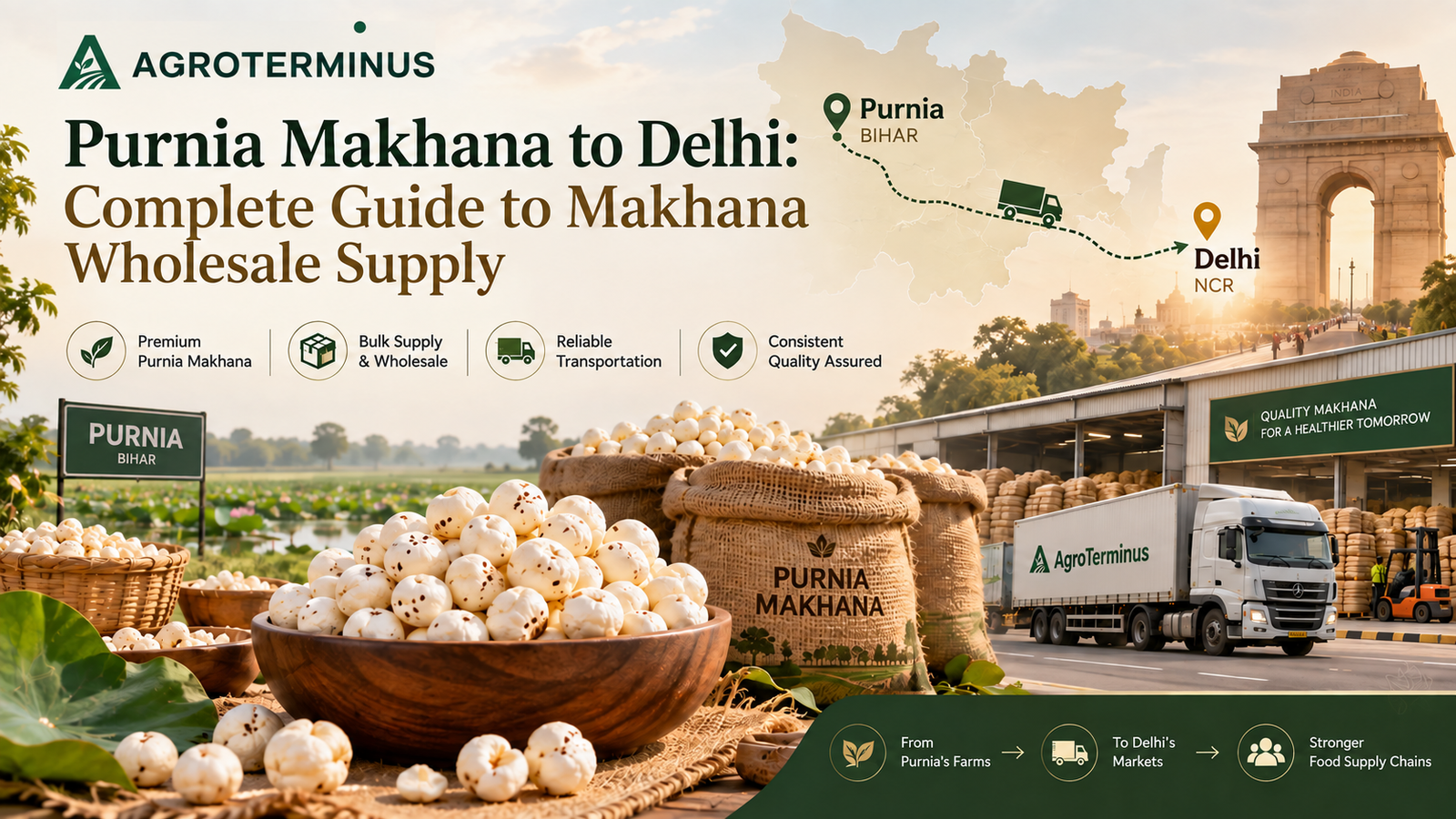
Makhana has become an increasingly popular product among retailers, distributors, supermarkets, food brands and businesses looking for a premium snack ingredient. For buyers in Delhi, sourcing makhana from Bihar’s major producing regions can provide access to different grades, quantities and wholesale supply options.
For businesses looking for a reliable Makhana Wholesale Supplier in Delhi, understanding how makhana moves from the production regions of Bihar to Delhi is important for evaluating quality, grade, pricing, packaging and supply consistency.
Purnia is an important region associated with makhana trade and supply in Bihar. This guide explains the key factors businesses should understand when sourcing makhana from Purnia and supplying it to Delhi for wholesale and commercial use.
Bihar is widely associated with makhana production, and buyers often look toward Bihar’s makhana-producing regions when sourcing products for wholesale requirements.
For a Delhi-based retailer, distributor or food business, sourcing makhana through established supply channels can help simplify bulk procurement.
When buying wholesale makhana, businesses generally need to consider:
Product grade and size
Quality and consistency
Source and procurement
Freshness
Storage and handling
Packaging
Transportation
Order quantity
Repeat supply availability
A supplier should be able to clearly explain these factors instead of providing only a price quotation.
The journey from a makhana-producing region in Bihar to a wholesale buyer in Delhi involves several stages.
Makhana is sourced from production and procurement networks in Bihar and then selected, graded, handled, packaged and transported according to the requirements of the buyer.
For commercial buyers, understanding this supply chain can help when evaluating suppliers.
A typical wholesale supply process may involve:
Sourcing from Bihar
Selection of suitable makhana
Grading according to size and quality
Quality checking
Storage and handling
Bulk packaging
Transportation to Delhi
Delivery to wholesalers, retailers or other businesses
The exact process can vary depending on the supplier, product grade, order size and packaging requirements.
Bihar is closely associated with makhana production, making it an important sourcing region for businesses dealing in makhana.
For Delhi buyers, sourcing through Bihar-linked supply networks can provide access to different grades and commercial quantities.
However, the source alone should not determine the buying decision.
Wholesale buyers should also evaluate:
Actual product quality
Grade consistency
Availability
Supplier communication
Packaging
Bulk pricing
Repeat-order capability
A supplier with transparent sourcing information can make it easier for businesses to understand what they are purchasing.
Makhana is available in different sizes and grades. Understanding these differences is important when purchasing in bulk.
AgroTerminus currently lists three major size options.
4 Suta makhana is listed at approximately 13 mm.
This smaller-size option may be suitable for businesses looking for a more value-focused product or specific snack and processing applications.
5 Suta makhana is listed at approximately 16 mm.
This medium-size option can be considered by businesses looking for a balance between size, appearance and commercial positioning.
6 Suta makhana is listed at approximately 20 mm.
The larger size can be considered by businesses looking for a more premium product presentation.
Availability may vary, so buyers should confirm current stock, specifications and actual grade before placing a bulk order.
Buying from a known sourcing region does not remove the need for quality checking.
Wholesale buyers should evaluate the actual batch before placing a large order.
Important factors include:
Size consistency
Colour
Cleanliness
Freshness
Texture
Broken pieces
Moisture condition
Overall appearance
A good wholesale supplier should be able to provide clear information about the grade and condition of the product.
Size can influence how a business positions its makhana product.
For example, a food brand selling premium roasted makhana may prefer larger and more uniform pieces, while another business may have a different requirement based on pricing or processing.
The important point is to compare equivalent grades when discussing wholesale prices.
A buyer should avoid comparing a smaller or mixed batch with a consistent larger-size batch simply because both are described as wholesale makhana.
Freshness and storage are important considerations for wholesale makhana.
Poor storage conditions can affect the product's overall condition, especially when moisture is involved.
Before placing a large order, buyers can ask the supplier about:
Storage conditions
Product handling
Packaging
Fresh stock availability
Moisture protection
Dispatch process
Requesting a sample can also help buyers evaluate the actual product before committing to a larger quantity.
Moving makhana from Bihar to Delhi requires proper handling and transportation.
For wholesale buyers, transportation is not simply about moving the product from one location to another. Packaging and handling can also influence the condition of the product when it reaches the buyer.
Businesses should therefore discuss:
Packaging format
Quantity per package
Transportation arrangements
Dispatch timelines
Handling during transit
Delivery location
Bulk order requirements
A supplier should communicate clearly about the expected dispatch and delivery process.
Wholesale prices can vary depending on several factors.
These may include:
Makhana grade
Size
Quality
Order quantity
Availability
Packaging
Transportation
Market conditions
For this reason, the lowest quotation does not necessarily represent the same product as another supplier's quotation.
When comparing suppliers, make sure the quoted products have similar specifications.
For example, a quotation for 4 Suta makhana should not be directly compared with a quotation for 6 Suta makhana without considering the difference in grade and size.
A reliable Makhana Wholesaler in Delhi should clearly explain what grade, quantity and packaging are included in the quotation.
Minimum order quantity is another important factor for commercial buyers.
Different suppliers may have different requirements depending on their business model and target customers.
AgroTerminus currently states that its wholesaler enquiry is intended for buyers meeting a minimum order requirement of 10 bags or 1,500 packets of 200 g, according to its website.
Buyers should confirm the latest MOQ directly with the supplier before placing an order.
Knowing the MOQ in advance helps retailers, distributors and food brands determine whether a supplier fits their purchasing requirements.
Packaging becomes particularly important when makhana is transported from Bihar to Delhi.
Wholesale buyers may have different packaging requirements depending on how the product will be sold or processed.
A distributor may require bulk packaging, while a food brand may need product suitable for further repacking.
Ask the supplier about:
Bulk bags
Packaging weight
Moisture protection
Product handling
Fresh packaging
Repacking requirements
Proper packaging can help protect the product during transportation and storage.
For businesses, one-time availability is usually not enough.
Retailers and distributors need to know whether the same or similar grade can be supplied again when their inventory runs low.
Before choosing a supplier, ask:
Can you supply the same grade regularly?
What quantity can you supply?
How often is fresh stock available?
What happens if a particular grade is unavailable?
How much advance notice is required for repeat orders?
A supplier should provide realistic information about availability instead of making commitments that cannot be maintained.
Wholesale makhana can be relevant to many types of businesses, including:
Makhana wholesalers
Retail stores
Dry-fruit shops
Supermarkets
Food brands
Snack companies
Online sellers
Distributors
Hotels
Caterers
Private-label businesses
The required grade, quantity and packaging will depend on the buyer's business model.
For example, a premium snack brand may require larger and more uniform makhana, while a distributor may focus more heavily on bulk availability and commercial pricing.
Delhi and Delhi NCR have a large market for packaged food, snacks, dry fruits and other food products.
For businesses operating in this market, a reliable supply chain can help with inventory planning and repeat procurement.
Inconsistent product quality can create challenges with:
Retail pricing
Customer expectations
Packaging
Inventory
Repeat orders
Product positioning
A dependable supplier can therefore become a long-term sourcing partner rather than simply a vendor for one transaction.
Before placing a wholesale order, buyers should ask specific questions.
Where is the makhana sourced from?
Ask the supplier to explain the sourcing region and procurement process.
Which grades are available?
Confirm the exact size and grade before comparing prices.
Can I receive a sample?
A sample allows you to evaluate the actual product before making a larger purchase.
What is the minimum order quantity?
Make sure the MOQ matches your business requirements.
How is the makhana stored?
Storage conditions can affect the quality of the product.
What packaging options are available?
Discuss bulk packaging and any specific requirements.
Can you supply regularly?
Repeat availability is important for retailers and distributors.
Does transportation to Delhi affect the quotation?
Ask whether transportation and delivery are included in the quoted price.
For Delhi-based businesses, having access to Bihar-linked sourcing while dealing with a supplier accessible to the Delhi market can simplify procurement.
AgroTerminus focuses on supplying makhana to wholesalers, retailers, distributors, food brands and other commercial buyers in Delhi while highlighting sourcing connections with Bihar's makhana-producing region.
Its listed makhana options include:
4 Suta Makhana around 13 mm
5 Suta Makhana around 16 mm
6 Suta Makhana around 20 mm
Bulk supply for business buyers
Sourcing connections with Bihar
Packaging options
Delhi-based business accessibility
Buyers should confirm current availability, specifications, MOQ and pricing directly before placing an order.
Businesses can source makhana through suppliers connected with Bihar's makhana-producing regions and serving Delhi's wholesale market. Buyers should compare source, grade, quality, pricing and supply capability before ordering.
Purnia is associated with makhana trade and supply in Bihar. Businesses sourcing from Bihar should still evaluate the specific quality, grade and availability offered by their supplier.
Yes. Makhana can be supplied to Delhi through commercial transportation and wholesale supply networks. Buyers should discuss packaging, handling, dispatch and delivery arrangements with their supplier.
AgroTerminus currently lists 4 Suta, 5 Suta and 6 Suta options, approximately 13 mm, 16 mm and 20 mm respectively. Availability can vary.
Check size consistency, colour, cleanliness, freshness, texture, breakage and moisture condition. Requesting a sample before placing a large order can also be useful.
Yes. Size and grade can influence wholesale pricing along with quality, availability, order quantity, packaging and transportation.
Yes. Retailers, distributors, supermarkets, food brands and other commercial buyers can purchase makhana in bulk depending on the supplier's minimum order requirements.
AgroTerminus currently states a wholesaler enquiry minimum of 10 bags or 1,500 packets of 200 g. Buyers should confirm the latest requirement directly with the supplier.
Check packaging, moisture protection, handling, dispatch timing, transportation arrangements and delivery requirements before finalising the order.
Compare suppliers based on grade, quality, source transparency, bulk pricing, packaging, availability, MOQ and repeat-supply capability rather than comparing price alone.
Sourcing makhana from Bihar for wholesale supply in Delhi involves more than simply finding a low price.
Businesses should evaluate the source, grade, quality, packaging, transportation, MOQ and long-term availability before placing a bulk order.
For retailers, distributors and food brands, a supplier that provides clear product information and understands commercial requirements can make wholesale procurement easier to manage.
AgroTerminus combines Delhi-based business accessibility with sourcing connections in Bihar's makhana-producing region and offers multiple makhana grades for commercial buyers.
Businesses looking for wholesale makhana can discuss their required grade, quantity, packaging and current availability with the supplier before placing an order.
Source from the right region, verify the quality and build a dependable Makhana supply chain from Bihar to Delhi.

